Bringing Communities Together to Explore Composting, Biochar and Regenerative Growing at Creative Beings
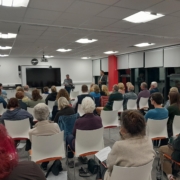
A sold-out workshop at Creative Beings on 22nd October brought together community groups, growers, volunteers and environmental organisations from across Devon to explore practical ways of improving soil health, reducing waste and building resilience to climate change.
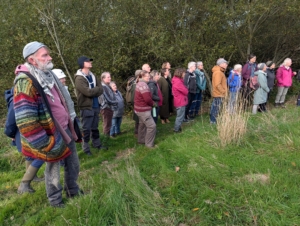
The Composting, Biochar & Regenerative Growing workshop brought together people with a shared interest in sustainable living, community growing and protecting the natural environment. The event combined expert presentations, practical learning, discussion and a guided tour of the Creative Beings site, giving participants the opportunity to discover how simple, nature-friendly approaches can make a positive difference in their own gardens, allotments and community spaces.
Attendees included gardeners, allotment holders, community growers, volunteers, environmental organisations and people keen to learn more about sustainable food production and climate-friendly land management.
Turning Organic Waste into a Valuable Local Resource
A key theme of the day was the importance of community composting and keeping valuable nutrients within local communities.
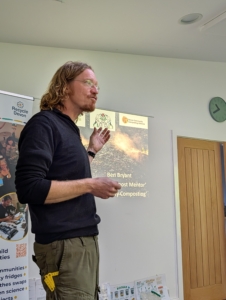
Ben Bryant explored how community composting initiatives across Devon are transforming food and garden waste into a valuable resource, reducing waste and supporting healthier soils and local food production.
Participants learned about the principles of successful composting, including balancing carbon-rich materials (‘browns’) with nitrogen-rich materials (‘greens’), maintaining moisture and airflow, and allowing organic matter to break down into nutrient-rich compost.
The discussion highlighted that composting offers benefits far beyond waste reduction. Returning organic matter to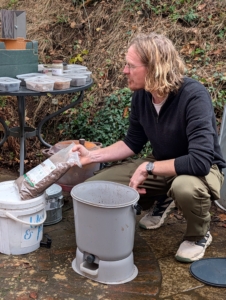 the soil increases soil fertility, improves structure and water retention, supports biodiversity and reduces reliance on imported fertilisers.
There was also a strong focus on the social value of community composting. Local schemes create opportunities for volunteering, sharing skills and bringing people together around a common purpose. In doing so, they can strengthen community connections, encourage environmental responsibility and help reduce social isolation.
Discovering the Potential of Biochar
Carolyn Dare introduced participants to biochar, a stable, carbon-rich material produced by heating biomass in a low-oxygen environment, a process known as pyrolysis.
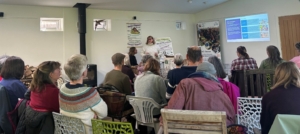 For some attendees, biochar was a new concept, and the session provided an opportunity to understand its potential role in improving soil health and supporting climate action.
Biochar can help soils retain water and nutrients, provide habitat for beneficial soil microorganisms and store carbon over long periods. Participants also learned about the importance of preparing or ‘charging’ biochar before adding it to growing areas, typically by combining it with compost, manure or other nutrient-rich materials.
The session encouraged attendees to think differently about natural resources and organic materials, exploring how innovative approaches can turn potential waste into something that benefits both the environment and food production.
Understanding Healthy Soils and Regenerative Growing
Throughout the workshop, the importance of healthy soil emerged as a central theme.
Healthy soil is a living ecosystem, containing bacteria, fungi, earthworms and countless other organisms that support plant growth, nutrient cycling and wider biodiversity.
Rather than simply feeding plants, regenerative growing focuses on nurturing the soil ecosystem itself. Participants explored practical approaches to achieving this, including:
- Minimising soil disturbance through no-dig and low-disturbance growing methods.
- Keeping living roots in the ground for as much of the year as possible.
- Protecting bare soil with compost, mulch and cover crops.
- Increasing diversity through a mixture of trees, shrubs, perennials and annual crops.
- Recycling organic matter and returning nutrients to the soil.
These approaches can improve soil structure, increase water retention, support biodiversity and help growing spaces become more resilient to drought, heavy rainfall and changing weather conditions.
Seeing Regenerative Growing in Practice at Creative Beings
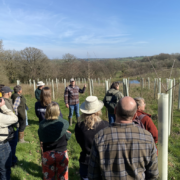
A highlight of the day was a guided tour led by Sue Holland, Martin and Seth giving participants the opportunity to explore the regenerative approaches being developed at Creative Beings.
The site provided a practical demonstration of how agroforestry and food forest principles can be incorporated into growing spaces to create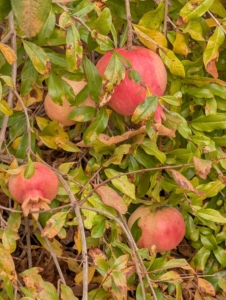 productive, biodiverse and climate-resilient environments.
Participants explored the food forest and permaculture growing areas, including the alley cropping project, and learned how different layers of planting can work together to create a more diverse and resilient ecosystem.
The tour highlighted the benefits of combining canopy trees, fruit and nut trees, shrubs, perennial vegetables, ground-cover plants and climbers. Italian Alder trees, for example, are being used within the site to provide canopy cover while fixing nitrogen and contributing to soil fertility.
The group also explored how trees and planting diversity can provide shade during increasingly hot summers, support wildlife, improve soil health and reduce dependence on external inputs.
Water management was another important part of the discussion. Attendees saw how rainwater harvesting, storage and treatment, alongside increased soil organic matter, permanent ground cover and perennial planting, can help growing spaces cope with both dry periods and heavy rainfall.
Seeing these techniques in action helped participants understand how regenerative principles can be adapted to different settings, from small domestic gardens and allotments to larger community growing projects.
Sharing Knowledge and Building Community Connections
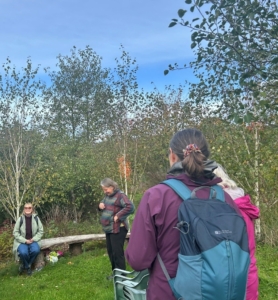 As well as providing practical environmental learning, the workshop created valuable opportunities for people and organisations from across Devon to meet, exchange experiences and share ideas.
By bringing together local practitioners, community groups and individuals with different levels of experience, the event demonstrated the value of learning from one another and connecting existing environmental initiatives.
Contributions from practitioners working on community composting, biochar and regenerative growing showcased the positive work already taking place across the county and helped attendees understand how local action can contribute to wider environmental goals.
The sold-out attendance demonstrated strong interest in accessible, community-focused opportunities to learn about sustainability and respond positively to environmental challenges.
Taking Practical Action Beyond the Workshop
Participants left with a range of practical ideas that could be put into action at home, in allotments and through community projects.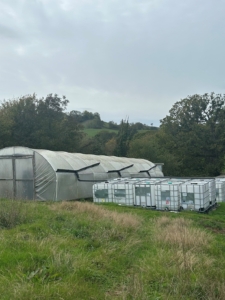
These included:
- Starting or improving a home or community composting system.
- Using compost to increase soil organic matter and improve growing conditions.
- Exploring the use of charged biochar alongside compost.
- Reducing digging and soil disturbance where appropriate.
- Keeping soil covered throughout the year using mulch and cover crops.
- Increasing plant diversity and incorporating more perennial planting.
- Exploring rainwater harvesting and more sustainable water management.
- Supporting local composting and community growing initiatives.
- Observing soil structure, earthworm activity and other indicators of soil health.
The overarching message was that meaningful environmental change does not always require complicated or expensive interventions. Relatively simple changes to how we manage organic materials, soil, water and planting can deliver significant long-term benefits.
Looking Ahead: Growing a More Sustainable and Connected Devon
The success of the workshop highlights the importance of bringing people together to explore practical solutions to environmental challenges.
Healthy soils sit at the heart of sustainable food production, biodiversity, carbon storage, climate resilience and community wellbeing. By sharing knowledge and demonstrating approaches that can be adopted at a local level, the event helped build confidence and inspire positive action beyond the workshop itself.
It also demonstrated that environmental projects can deliver much more than ecological benefits. Community composting, shared growing spaces and practical learning opportunities create connections between people, encourage volunteering and help build stronger, more resilient communities.
With funding from the Together for Tomorrow Project, the event provided an opportunity for Ben from Sustainable South Hams to share his wealth of experience, bring together local expertise, create an accessible learning experience and showcase practical examples of sustainability in action..
The enthusiasm and engagement of participants showed the appetite for further opportunities to learn, collaborate and take action together.
By keeping nutrients local, looking after our soils and growing in harmony with nature, communities across Devon can play an important role in creating a healthier, more resilient and sustainable future.