
Harvesting Resilience Workshop – 10th July 2026
Hosted by Blackdown Hills Eco Hub
Cultivating resilient plants, nourishing ecosystems, strengthening local food systems in uncertain times
The day brought together a wide range of perspectives on how growing, food systems, soil health and community spaces can contribute to a more resilient future. Through presentations from practitioners, researchers and community groups, participants explored how agroforestry, allotments, water harvesting, composting, biochar, sustainable agriculture and community gardens can support biodiversity, climate adaptation, food security and wellbeing.
Community Agroforestry and Food Forest Project
Sue Holland, Creative Beings CIC
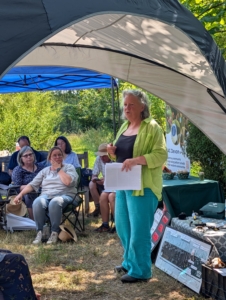
Sue Holland shared the seven-year journey of developing a six-acre agroforestry and food forest project through Creative Beings CIC. The project was established in response to growing concerns around climate change, biodiversity loss, declining soil health and future food security. Drawing on her previous experience working with the Met Office, Sue highlighted the urgent need to explore new approaches to food production as extreme weather events become increasingly common.
Sue introduced agroforestry as the practice of combining food production with trees and described different approaches, including food forestry, alley cropping and silvopasture. The project’s central food forest follows a woodland-inspired layered system, incorporating canopy trees, fruit trees, shrubs, herbs, climbers, roots and ground cover. Italian alder trees were selected as a key part of the system due to their ability to fix nitrogen and provide the dappled shade needed to protect crops during hotter summers.
The one-acre food forest was established with around 1,800 trees, more than 200 plant species and carefully designed petal-shaped planting beds. Soil preparation focused on working with natural processes, using mulch and membranes rather than herbicides. Over six years, the site has evolved from intensively managed planting areas into a more self-regulating ecosystem, with improved biodiversity, healthier soils, increased shade and significantly reduced watering needs.
Sue also described the project’s alley cropping system, where rows of trees provide shelter and shade for vegetables, herbs, flowers and perennial crops grown between the tree lines. This approach can help reduce heat stress and support crop resilience as climate conditions change.
Water management has been a key consideration, particularly within the alley cropping area. Through support from the Farming in Protected Landscapes (FiPL) programme, the project installed a 46,000-litre rainwater harvesting system, including collection infrastructure and drip irrigation supplied from a polytunnel roof.
The project’s priorities are:
- Building healthy soils.
- Increasing biodiversity.
- Creating complex and resilient ecosystems.
- Producing nutritious food.
- Connecting people with food growing.
Sue emphasised that food production is a consequence of a healthy ecosystem rather than the sole focus. The biggest challenges include securing funding, the long establishment times required for trees and perennial systems, sourcing compost, managing wildlife pressures and navigating planning requirements within protected landscapes.
Sue highlighted growing national interest in agroforestry, referencing projects such as Wakelyns in Suffolk and Wood Advent Farm near Porlock, alongside increasing interest from DEFRA and Forest Research in scaling up agroforestry approaches. While still developing, these projects demonstrate the potential for agroforestry to strengthen climate resilience, biodiversity and local food systems.
Water Saving, Community Growing and Climate Resilience
Kathryn May, Axminster Allotment Association
Kathryn May, secretary of the Axminster Allotment Association, shared how the association is adapting to changing growing conditions while strengthening community connections and encouraging more sustainable approaches to food production.
The association manages three allotment sites, including one with around 100 plots, and is affiliated with the National Allotment Society, which provides support, guidance and resources. Following disruption during COVID, the committee has been rebuilt with a renewed focus on community engagement and making allotments more accessible beyond individual plot holders.
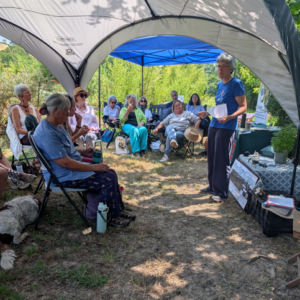 Kath described how allotment culture is changing. While traditional approaches often focused on neat rows and removing all weeds, many newer growers are embracing biodiversity, organic methods, soil health and working alongside nature. This has created a diverse mix of growing styles and philosophies across the sites.
Building community links has become a priority, with initiatives including seed swaps, a community seed library hosted by the local library, workshops, links with food-sharing projects and encouragement for growers to share surplus produce rather than allowing it to go to waste.
A major focus of the association’s work is water conservation. Kath highlighted that a traditional allotment plot can require up to 8,000 litres of water annually, making rainwater harvesting and soil improvement increasingly important. The association has secured support to install a 1,000-litre IBC rainwater collection tank on a communal shed, creating a demonstration project for other growers.
Participants discussed practical ways to reduce water use, including:
- Collecting rainwater from sheds and structures.
- Covering water storage to reduce evaporation.
- Directing water to plant roots.
- Using mulches such as compost, grass cuttings and cardboard.
- No-dig growing methods.
- Improving soil organic matter.
- Using drip irrigation, leaky hoses and terracotta ollas.
- Watering early in the morning to reduce evaporation.
The discussion also explored soil health practices including composting, green manures, biochar, companion planting and perennial crops. Many growers are experimenting with varieties and systems that are better suited to changing weather patterns.
Kath highlighted the role allotments can play in tackling food waste and supporting communities through food-sharing initiatives, community kitchens, cafés and projects such as Project Food in Axminster. The emphasis was on ensuring surplus produce supports local people rather than being wasted.
Wildlife-friendly approaches were also discussed, including encouraging birds, hedgehogs and other natural predators, maintaining hedges and creating habitats that support biodiversity while protecting crops.
The key message was that allotments are valuable community assets that can contribute to food security, climate resilience, environmental education and social connection through relatively simple changes in practice.
Community Composting, Food Waste and Soil Health
Melissa Harvey – Sustainable South Hams
Melissa Harvey, composting mentor with Sustainable South Hams, explored how composting can transform waste into a valuable resource that supports soil health, biodiversity, food production and carbon storage. She also works with the Apricot Centre, which provides training in regenerative land management, agroforestry, permaculture and soil ecology.
Mel emphasised that composting is not simply a waste management process but a living ecosystem involving bacteria, fungi, worms and countless other organisms. Successful composting depends on maintaining the right balance of air and water, avoiding conditions that create either dry, slow decomposition or wet, anaerobic and unpleasant-smelling piles.
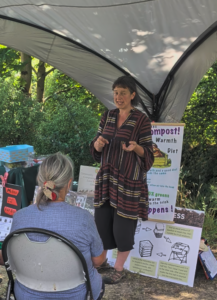 She shared examples of successful community composting schemes across Devon, including South Brent, Ashburton and Marldon. These projects enable residents to bring garden waste and prunings to shared sites where material is processed into compost through volunteer-led systems. Many have operated for decades, diverting waste from disposal, creating community opportunities and generating income through compost and other products.
Mel explained that the biggest challenges for community composting are access to suitable land, hard-standing areas, vehicle access and equipment such as shredders and compost turners.
The importance of compost quality was discussed, comparing high-temperature municipal compost with mature community compost systems. While commercial compost can add organic matter, community compost often contains richer microbial life and contributes more effectively to long-term soil health. Participants also discussed combining compost with biochar to improve nutrient retention and biological activity.
Food waste composting presents different challenges due to higher moisture levels and potential pest issues. Mel highlighted the importance of reducing food waste first, then reusing wherever possible and composting locally when appropriate.
She introduced two systems suitable for community use:
- Jora compost tumblers, which use insulated rotating containers and a balance of food waste and carbon materials.
- Ridan composters, continuous-flow systems developed in North Devon that require minimal physical effort.
Both systems can process cooked food, meat and dairy safely and are suitable for schools, communities and organisations.
Mel highlighted examples of community food waste projects, including school farms, community schemes in Kingsbridge and social enterprises such as the Compost Club in Lewes and Loop Frome. She also shared examples of urban community composting models, demonstrating that local composting can work in many settings.
The discussion explored wormeries, biochar, bone char, woody residues and the potential for more community composting workshops. The overall message was that composting is a practical way to reconnect communities with natural cycles while improving soils and reducing waste.
Healthy Soils, Resilient Harvests: Vital Role of Healthy Soil
Vicky McLachlan, Nature Based Solutions Consultant / BH Eco Hub
Vicky McLachlan highlighted the vital role of healthy soils in creating resilient agricultural systems. She explored how natural processes historically supported fertile landscapes through grazing animals and nutrient cycling.
 Vicky explained how deep-rooting plants, diverse grasses and soil microbes work together to move and recycle nutrients, while highlighting the importance of dung beetles in maintaining soil fertility. She discussed the pressures facing dung beetle populations, with many of the UK’s native species now threatened.
She explored the challenges of monoculture farming and the benefits of mixed farming systems where different livestock species can support soil health without increasing parasite risks. Vicky used Australia’s experience of introducing dung beetles after livestock farming expanded without suitable native beetles to process manure as an example of the importance of understanding ecological relationships.
She also highlighted the role of plants such as spear thistles in supporting wildlife, including painted lady butterflies, and how removing these plants can reduce important habitats.
The key message was that biodiversity above and below ground is fundamental to productive, resilient farming systems.
Growing More Than Food: Community Gardens, Wellbeing and Resilient Food Systems
Dr Paul Cleave, University of Exeter
Dr Paul Cleave explored the links between food, learning, community and wellbeing through his work with the University of Exeter’s MA Food Studies programme and Exeter Community Garden.
The MA Food Studies programme provides an interdisciplinary exploration of food systems, culture and sustainability, bringing together perspectives from social sciences, humanities and environmental studies. Paul described how students engage with Exeter Community Garden, a volunteer-led space bringing together students, staff and local residents to grow food, enhance biodiversity and share knowledge.
 Students have developed practical growing skills through working in raised beds, hugelkultur systems, polytunnels, greenhouses and the orchard. Paul reflected on the excitement of harvesting their first crops, including potatoes, and how quickly the garden became a safe and welcoming space for students living away from home.
The garden has become a place for growing, feeding, healing and community. Medical students, environmental and sustainability students, science students and others have come together through a shared interest in food, nature and wellbeing, creating friendships and support networks beyond academic disciplines.
Paul shared the work of Dr Susan Taheri at Bow Medical Practice in Devon, where gardening is used as part of a green social prescribing approach. The Growing Well Garden provides a space for people experiencing loneliness, stress and long-term health conditions, demonstrating how nature-based activities can complement healthcare. As Dr Taheri explains, in the surgery she talks about illness, but in the garden, she talks about health.
Students also visited projects including Princesshay Roof Gardens and Ashburton Dartmoor Tea Estate, where they learned about innovative approaches to growing including Prof Nigel Mason’s project to be able to make a cup of tea on the moon. Scientists are testing tea plants grown on Dartmoor in lunar- and Martian-like soils at the University of Kent to investigate whether tea and other crops could be cultivated in space. This research aims to understand how crops might survive in extreme environments, supporting future space exploration while also contributing to climate-resilient agriculture on Earth.
Paul also reflected on the historical importance of gardens by sharing Our Gardens, a 1948 Ministry of Health booklet created to inspire post-war communities and planners to transform bare housing estates into greener, healthier living environments. The publication highlighted the important role that green spaces played in post-war reconstruction and public wellbeing.
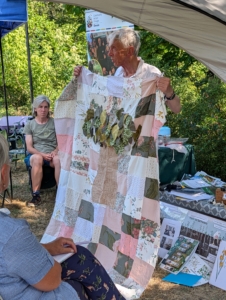
Students were encouraged to reflect on their experiences through journals, but many chose creative approaches rather than digital formats. Their artwork, often connected to family stories and personal experiences, created an impressive collection of reflections. Paul shared examples including a quilt and other pieces now included in the Gardening, Community and Wellbeing online exhibition, which explores the role of gardens in supporting health, social connection and wellbeing.
Paul also shared The Hedgerow Year, a beautifully illustrated record by Sandra Charlton of a local hedgerow in Crediton 25 years ago. The seasonal observations provide a valuable record of biodiversity and changing natural rhythms. With blackberries already fruiting in early July, the example highlighted the visible impacts of climate change on local ecosystems.
The Harvesting Resilience Workshop demonstrated that community growing spaces are far more than places to produce food. They are spaces for learning, connection, creativity and wellbeing, helping communities build resilience while strengthening relationships between people and nature.
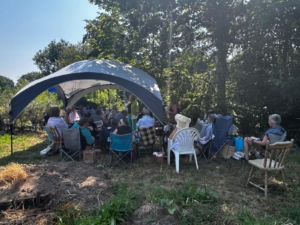
Throughout the hot day, participants were refreshed with ice-cold water, while the setting beside the stream, surrounded by mature trees and wildlife, provided a naturally cool and grounding environment that connected the event to the landscape.
In the afternoon, attendees enjoyed stinging nettle and polenta cake, before the day concluded with a celebration of CAG Devon’s 10-year anniversary, marked with glasses of homemade elderflower spritz and locally grown beetroot and broad bean hummus.
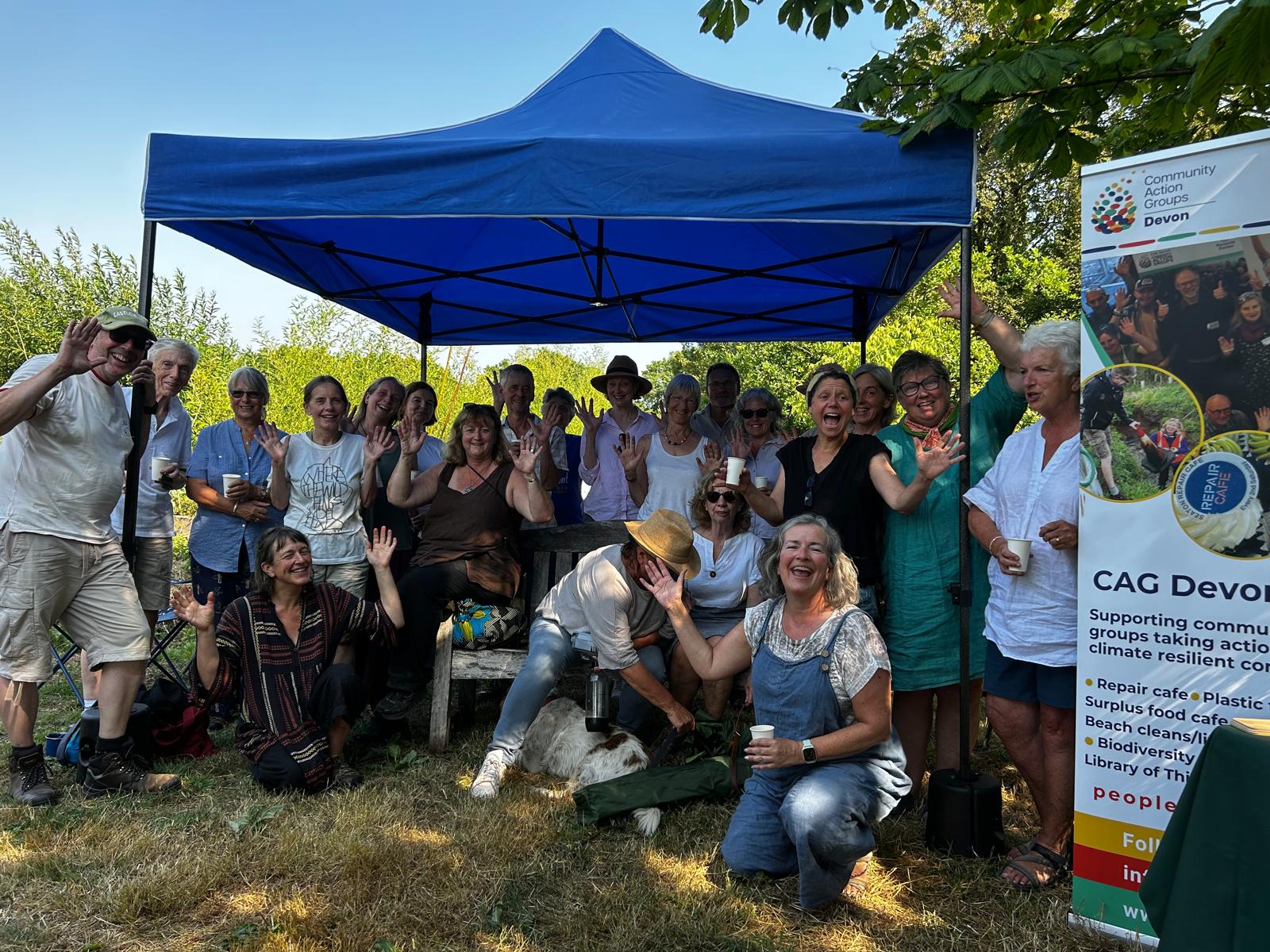
A few comments from the day
“It was such an interesting day and I got to meet some lovely people with great ideas, so inspiring”
“It’s reminded me of the importance of connecting, sharing and reaching out – not just ‘doing it’!”
“It reinforced again how important it is to build soil and habitat.”
“Thank you for a really interesting and uplifting day. So joyful to spend time with people who are passionate about the environment. My colleague and I really enjoyed it. And that nettle cake was insanely good.”
Kindly Supported by:


